New York & Company: History, Bankruptcy, Ownership & Status
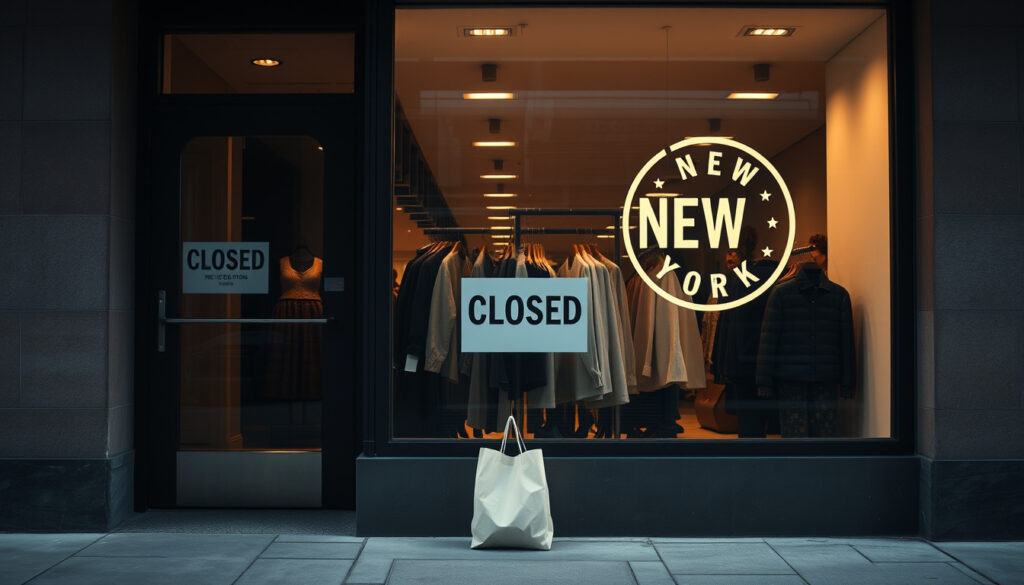
New York & Company, the women’s workwear chain that started as Lerner’s in 1918, filed for Chapter 11 bankruptcy in July 2020 and closed all physical stores. Today it survives as an e‑commerce brand owned by the Saadia Group, a shift that mirrors the broader retail upheaval accelerated by the pandemic.
Brand Overview
- Founded 1918 as Lerner’s – Edspira
- Renamed New York & Company in 2006 – Business Insider
- Headquarters in New York City – Wikipedia
- Focused on women’s workwear and casual apparel
Current Status
- Online‑only retailer – Official site
- Owned by Saadia Group – Wikipedia
- Available at nyandcompany.com and on Amazon
- CEO Jack Saadia (principal of Saadia Group) – Retail Dive
Key Events
- July 13, 2020: Chapter 11 bankruptcy filing – Business Insider
- 2020: Acquired by Saadia Group – Wikipedia
- 2021: E‑commerce relaunch – Edspira
- All physical stores closed by late 2020 – Business Insider
Customer Experience
- Return policy: 30 days – Official site
- Loyalty program available
- Buy now, pay later options
- Mixed reviews on Yelp and Trustpilot – Yelp
Founded: 1918 (as Lerner’s) • Headquarters: New York City • Employees (2024): 500 • Chapter 11 Filing: July 2020 • Current Status: E‑commerce only • Owner: Saadia Group
| Fact | Value | Source |
|---|---|---|
| Original name | Lerner’s (1918) | Edspira |
| Renamed | New York & Company (2006) | Business Insider |
| Stores at bankruptcy | 387 stores in 33 states | Edspira |
| Operating loss (2019) | ~$62 million | Wikipedia |
| Bankruptcy date | July 13, 2020 | Business Insider |
| Acquisition price | $20 million (Sunrise Brands / Saadia Group) | Wikipedia |
What happened to New York and Company?
New York & Company filed for Chapter 11 bankruptcy on July 13, 2020, after years of declining sales and mounting debt. The COVID‑19 pandemic delivered the final blow, forcing the closure of all 387 stores and the furlough of most of its 4,971 employees. Later that year, the Saadia Group acquired the brand’s intellectual property and e‑commerce assets for $20 million and relaunched it as an online‑only retailer in early 2021.
Bottom line: New York & Company ceased operating physical stores in 2020 and now exists solely as a digital brand under its new owner, the Saadia Group.
Why did New York & Company go bankrupt?
The chain entered 2020 already struggling. Same‑store sales declined 5.4 % in fiscal 2019, and the company posted an operating loss of nearly $62 million. S&P named it the second most vulnerable retailer in February 2020. When the pandemic hit, mall traffic evaporated, leaving $76 million in unsold inventory. With no cash reserve and a heavy debt load, the company had no choice but to file for bankruptcy.
“Why did New York & Company go bankrupt? A look at the pandemic and debt.” – Edspira
When did it go out of business?
The bankruptcy filing on July 13, 2020 triggered immediate liquidation sales. By late 2020 all physical locations had closed. The brand’s online store went dark for several months before reappearing under new ownership in early 2021.
Warning: The closure of all 350+ stores was not a gradual phase‑out but a rapid liquidation triggered by the pandemic.
Why did New York & Company go bankrupt?
The factors are a mix of long‑term structural decline and a sudden pandemic shock. The company had been closing stores since 2014 (150 closures) and rebranded to RTW Retailwinds in 2018 in a failed attempt to pivot to e‑commerce. Debt mounted while foot traffic fell. When COVID‑19 forced mall closures in March 2020, the chain’s cash‑negative model collapsed.
The pattern: brick‑and‑mortar specialists with heavy mall exposure were especially vulnerable to the 2020 retail crisis.
Impact of the COVID‑19 pandemic on brick‑and‑mortar retail
New York & Company’s stores were almost entirely in malls and shopping centers. The nationwide lockdown in March 2020 emptied those locations, leaving $76 million in spring merchandise unsold. The company furloughed the vast majority of its nearly 5,000 employees and could not make rent. The pandemic accelerated an already‑failing business.
Company financial struggles before 2020
Before the virus, the company was bleeding money. In 2019 it posted a $62 million operating loss, same‑store sales fell 5.4 %, and the NYSE warned of delisting. The board had already shut 30 stores at the end of 2019. The only question was when, not if, a bankruptcy would come.
“New York & Company, Inc. (NY&C) is an e‑commerce workwear retailer for women.” – Wikipedia
When did New York & Company go out of business?
July 13, 2020 is the legal date of filing. Stores began closing immediately after, and by the end of 2020 no physical locations remained. The brand went dark online for several months before the Saadia Group relaunched it as an e‑commerce site in early 2021.
Timeline of store closures
- July 13, 2020: Chapter 11 petition filed
- Summer 2020: Liquidations begin; all 387 stores marked for closure
- Fall 2020: Final store doors locked
- Late 2020: Acquisition by Saadia Group completed
- Early 2021: Website relaunched as digital‑only retailer
The implication: the brand did not vanish — it shed its physical footprint entirely.
Who owns New York and Company now?
The Saadia Group, a fashion conglomerate led by Jack Saadia, acquired the brand in late 2020 for roughly $20 million. The purchase included the intellectual property, the website, and customer data but no physical stores or leases. Saadia Group also owns the online operations of Lord & Taylor, making the acquisition part of a broader strategy to revive legacy brands as e‑commerce properties.
The Saadia Group acquisition
“Ordered online, received quickly, but sizing inconsistent.” – Anonymous Yelp reviewer
Saadia Group paid $20 million for the IP and e‑commerce assets. The deal closed in September 2020 after initial approval from the bankruptcy court. The group has not disclosed post‑relaunch revenue figures, but the brand continues to operate under its original name.
The catch: while the brand lives on, the customer experience has shifted — no physical returns, no in‑store try‑ons, and a reduced product selection compared to its heyday.
What was New York and Company originally called?
The company started in 1918 as Lerner Shops, a women’s apparel chain founded in New York City. It was acquired by Limited Brands (then The Limited) in 1963. After 17 years of ownership, Limited spun off the business in 2002, and it was renamed New York & Company in 2006.
History from Lerner’s to New York & Company
| Year | Name | Event |
|---|---|---|
| 1918 | Lerner Shops | Founded |
| 1963 | Lerner (owned by Limited) | Acquired by Limited Brands |
| 2002 | New York & Company (still under Limited) | Limited sells the business |
| 2006 | New York & Company (public) | Rebranded after spin‑off |
| 2018 | RTW Retailwinds (parent) | Corporate rebranding |
| 2020 | New York & Company (brand) | Bankruptcy, then Saadia Group ownership |
What this means: the brand has changed hands and names multiple times, but the core identity — affordable women’s apparel — remained constant.
Related reading: Hamburger Chain Restaurant Closures Sweep US 2025-2026 · Antonio Brown Net Worth 2026: -$3M After $80M Career
Frequently Asked Questions
Is New York and Company a good company?
Customer reviews are mixed. The brand offers a wide range of women’s workwear at moderate prices, but sizing inconsistency and limited return options (online‑only) are common complaints. Trustpilot shows an average rating of 3.5 stars.
Does New York & Company have physical stores?
No. All stores closed permanently in 2020. The brand is now online‑only.
What is the return policy of New York & Company?
Returns are accepted within 30 days of delivery. Items must be unworn with tags. The customer pays return shipping unless the item is defective.
How do I contact New York & Company customer service?
Contact via the website’s live chat, email (service@nyandcompany.com), or phone (1‑800‑698‑8778). Hours vary.
What sizes does New York & Company offer?
Sizes range from XS to 3X for most styles, with a separate plus‑size collection. Many items also come in petite and tall lengths.
Are there any current promotions or discounts?
The brand regularly offers site‑wide sales (e.g., 40 % off, clearance events) and a loyalty program called NY&C Rewards that provides exclusive deals.
How long does shipping take from New York & Company?
Standard shipping (orders over $75) usually arrives in 5–7 business days. Expedited options are available at checkout.
Is New York & Company owned by the same group as other retailers?
Yes. Saadia Group also owns the online operations of Lord & Taylor and other legacy apparel brands.
Tip: For the best deals on New York & Company clothing, check their clearance section and sign up for loyalty rewards before purchase.
Last verified facts (confident): Bankruptcy date (July 13, 2020), acquisition by Saadia Group, rebranding from Lerner’s in 2006, current e‑commerce model. Unclear: exact employee count before bankruptcy, detailed financial terms of the sale, post‑relaunch revenue.
New York & Company survived bankruptcy by shedding its physical stores and re‑emerging as a digital‑only brand under the Saadia Group. The implication: legacy retailers can survive, but only by radically restructuring their cost base and distribution model.
More related posts
 Apple Watch Blood Pressure: Hypertension Alerts Guide
 Korean to English Translation: Google vs DeepL vs ChatGPT
 How Soon Will a Pregnancy Test Read Positive? Timing Guide
 Up Faith and Family – Family Streaming Guide
 Update on Government Shutdown: DHS Resolution and Impacts
 Environmental Protection Regulations Categories: Complete Guide
 Why Do My Nipples Hurt When Touched Not Pregnant? Causes & Relief
 Paris Saint-Germain Finances: Revenue, Mbappé, Richest Club
