Septic Service Near Me – Costs, Frequency, Expert Guide
Locating qualified septic service requires navigating variable pricing, licensing requirements, and urgent maintenance schedules. Homeowners searching for immediate assistance or routine pumping face a fragmented market where costs swing from $175 to over $750 depending on geography, tank specifications, and accessibility constraints.
Understanding the full scope of septic maintenance protects both property value and public health. Systems process household waste through anaerobic digestion, requiring periodic professional intervention to remove accumulating solids and inspect for structural failures before effluent contaminates drain fields or groundwater.
How to Find Reliable Septic Service Near Me
Selecting a provider demands verification beyond digital ratings. Licensed operators must carry specific waste-hauling permits and liability coverage that varies by county regulations. Reputable companies provide written estimates detailing disposal fees, labor rates, and contingency charges for tanks located under pavers or structures.
| Pumping | Remove accumulated solids and scum layers every 3–5 years to prevent backups and system failure. |
| Inspection | Visual and camera-assisted examination of tank walls, baffles, and inlet/outlet pipes ($150–$450). |
| Repair | Structural fixes including crack sealing, baffle replacement, and damaged line excavation. |
| Emergency | 24/7 response for sewage backups and drain field saturation, typically commanding 50–100% premium rates. |
Critical selection criteria include:
- Verify licensing: Confirm state certification and waste-transport permits through local health departments.
- Check insurance: Request certificates showing general liability and environmental contamination coverage.
- Review equipment: Ensure trucks carry high-capacity vacuum pumps and video inspection cameras.
- Compare estimates: Obtain three written quotes detailing tank location fees and disposal charges.
- Assess availability: Confirm response times for emergencies and weather-related access issues.
- Inspect disposal: Ask for documentation proving waste delivery to approved treatment facilities.
- Schedule proactively: Arrange service every three years rather than waiting for backup symptoms.
| Specification | Typical Range |
|---|---|
| National pumping average | $300–$700 |
| 750-gallon tank | $225–$550 |
| 1,000-gallon tank | $300–$700 |
| 1,500-gallon tank | $450–$1,100 |
| Recommended service interval | 3–5 years |
| Standard pumping duration | 1–3 hours |
| Annual maintenance budget | $100–$1,000 |
| Inspection cost | $150–$450 |
| Filter cleaning | $100–$400 |
| Portland, OR market rate | $440–$750 |
| Minneapolis, MN market rate | $175–$275 |
| Virginia statewide range | $250–$700 |
How Much Does Septic Pumping Cost Near Me?
Pricing reflects four primary variables: tank capacity, sludge depth, geographic location, and access complexity. A1,000-gallon tank serving a four-person household typically costs $300–$700 to pump, while 1,500-gallon systems range from $450–$1,100 according to Angi cost data. Additional cleaning beyond standard pumping adds $200–$300.
Regional Price Variations
Metropolitan markets show dramatic disparities. Homeowners in Portland, Oregon face average bills of $440–$750, while Minneapolis residents typically pay $175–$275. Phoenix averages $360–$600, and Virginia pricing spans $250–$700 depending on soil conditions and county disposal fees. Baltimore services start near $250.
Urban areas with strict environmental regulations and higher fuel costs consistently report 40–60% higher pumping rates than rural markets. Remote properties requiring off-road vacuum truck access may incur additional mileage surcharges.
Ancillary Service Charges
Routine maintenance extends beyond pumping. Inspections utilizing camera probes to examine drain field health cost $150–$450. Filter cleaning ranges $100–$400 annually. Major repairs such as clearing solidified clogs can reach $1,700, while full drain field rehabilitation runs significantly higher. HomeGuide data confirms these figures reflect national mid-range estimates.
How Often Should a Septic Tank Be Pumped?
The Environmental Protection Agency recommends pumping every three to five years. However, households exceeding standard occupancy rates or using garbage disposals require more frequent service. A1,000-gallon tank processing waste from two people might last five years, while the same tank serving six people needs pumping every two to three years. Understanding Greek God of War – Ares Myths, Symbols, Battles requires similar attention to detail regarding complex systems and maintenance cycles.
Usage Variables
High-volume water consumption from hot tubs, multi-head showers, or frequent laundry accelerates sludge accumulation. Non-biodegradable materials including wipes, feminine hygiene products, and coffee grounds reduce tank capacity and demand more frequent pumping intervals.
What to Expect from Septic Service
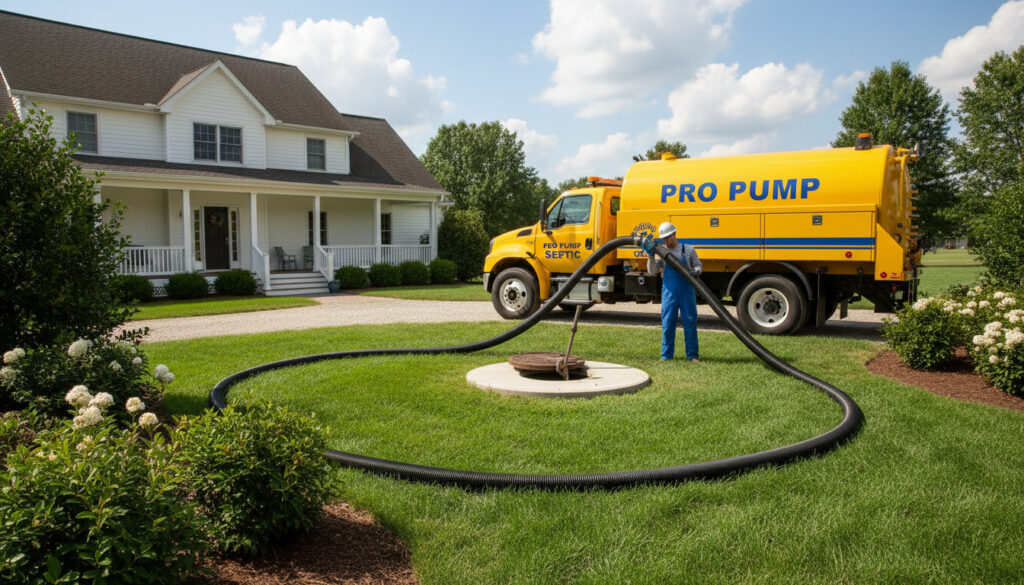
Professional service follows a standardized protocol beginning with tank location and excavation. Technicians remove access lids using specialized equipment to prevent damage, then insert high-capacity vacuum hoses to extract liquids, solids, and floating scum. Maryland-based providers emphasize that proper cleaning includes scraping residual solids from tank walls and baffles.
DIY pumping attempts expose homeowners to hydrogen sulfide gas, pathogenic bacteria, and potential tank collapse. Without commercial vacuum equipment and proper disposal permits, individuals face environmental violations and voided system warranties. Professional licensing ensures compliance with state health department regulations.
Recognizing Service Indicators
Slow drains throughout the house, gurgling toilet sounds, and sewage odors indicate immediate attention requirements. Outdoor warning signs include saturated soil above the drain field, bright green grass strips during dry weather, and standing water near tank lids. Licensed Maryland contractors note that these symptoms often precede complete system backups by days or weeks.
Multiple fixtures backing up simultaneously suggests main line blockage rather than localized clogs. Sewage surfacing in yards requires immediate evacuation of the area and urgent professional intervention to prevent groundwater contamination.
Timeline for Septic System Maintenance
- New Installation: Schedule first professional inspection within 6–12 months to verify system balance and baffle integrity.
- Year 2–3: Initial pumping for standard four-person households with 1,000-gallon capacity.
- Every 3–5 Years: Routine pumping service based on sludge level measurements rather than calendar dates.
- Annual Inspections: Visual examination of tanks and filters between major pump-outs.
- Immediate Response: Emergency service when warning signs appear—delaying action increases repair costs exponentially.
Established Facts vs. Regional Variables
| Confirmed Standards | Location-Specific Factors |
|---|---|
| 3–5 year pumping interval for standard households | Exact permit requirements vary by county |
| $300–$700 national cost range for standard service | Soil composition affects drain field performance |
| Licensed professionals required by state law | Specific disposal facility fees by municipality |
| Hazardous waste regulations prohibit DIY pumping | Winter access surcharges in northern climates |
| Inspection cameras detect cracks and root intrusion | Warranty terms vary by installation contractor |
How Septic Systems Function
Wastewater flows into buried concrete, fiberglass, or polyethylene tanks where solids settle and anaerobic bacteria decompose organic matter. Clarified effluent exits to drain fields for soil filtration. This biological process requires undisturbed settling time; excessive water volume or antibacterial chemicals disrupt the ecosystem and accelerate sludge accumulation.
Local health departments enforce setback requirements from wells and water bodies. Greek God of War – Ares Myths Family Symbols provides additional context regarding historical resource management and environmental protection practices, though modern systems rely on engineered drainage rather than mythological intervention.
County regulations dictate tank sizing based on bedroom counts and soil percolation tests. Properties failing percolation tests require alternative systems with sand mounds or aerobic treatment units, significantly affecting maintenance schedules and service costs.
Regulatory Guidance and Industry Standards
The Environmental Protection Agency establishes baseline maintenance protocols emphasizing proper waste disposal and water conservation. State health departments implement specific licensing requirements for pumpers and haulers, with Virginia regulations requiring certified technicians for all residential systems.
“Pump when sludge reaches one-third of tank capacity, typically occurring every three to five years for residential systems. Avoid grease, household chemicals, and non-biodegradable wipes to prevent system overload.”
Environmental Protection Agency Septic Guidelines
“Licensed pumpers must demonstrate equipment compliance and waste transport documentation. Unlicensed operation violates state environmental codes and exposes homeowners to liability.”
State Health Department Regulatory Standards
Chesapeake area providers confirm that proper documentation protects property owners during real estate transactions and environmental audits.
Maintaining Your Septic Investment
Effective septic management combines proactive scheduling, verified professional relationships, and usage discipline. Homeowners establishing three-year inspection cycles avoid emergency premiums while protecting groundwater quality. Documented maintenance histories increase property values and streamline resale inspections.
Frequently Asked Questions
Can I pump my own septic tank?
No. State regulations require licensed waste haulers. DIY attempts risk exposure to toxic gases, structural collapse, and environmental contamination fines.
How do I know if my septic tank needs pumping?
Watch for slow drains, gurgling sounds, sewage odors, or bright green grass over the drain field. Indoor backups indicate immediate service requirements.
How long does septic pumping take?
Standard service requires one to three hours depending on tank size, sludge depth, and access difficulty. Tanks requiring excavation take longer.
What happens if I don’t pump my septic tank?
Solid accumulation blocks drain fields, causing sewage backups into homes and surface pooling. Untreated effluent contaminates groundwater and requires expensive system replacement.
Does septic pumping fix all system problems?
Pumping removes solids but does not repair cracked tanks, failed drain fields, or broken baffles. Inspections identify structural issues requiring separate repairs.
Are septic inspections required when selling a home?
Most jurisdictions mandate inspections before property transfer. Check local health department requirements, as regulations vary by county and state.
What should I avoid putting in my septic system?
Never flush wipes, feminine products, coffee grounds, grease, or antibacterial chemicals. These materials kill beneficial bacteria and clog system components.
Can heavy rain affect my septic system?
Saturated ground prevents drain field absorption, causing backups. Reduce water usage during prolonged wet weather and inspect for surface saturation.
More related posts
 Alec Baldwin Movies and TV Shows – Complete Filmography 2024
 Treat Williams Movies and TV Shows: Complete Filmography
 How to Train Your Dragon 2025 Cast: Full Live-Action Actors List
 How Old Is Benson Boone – Current Age, Birthdate and Career
 City of Chicago Jobs: Official Openings and Application Guide
 How to Make a Budget: Step-by-Step Guide & Examples
