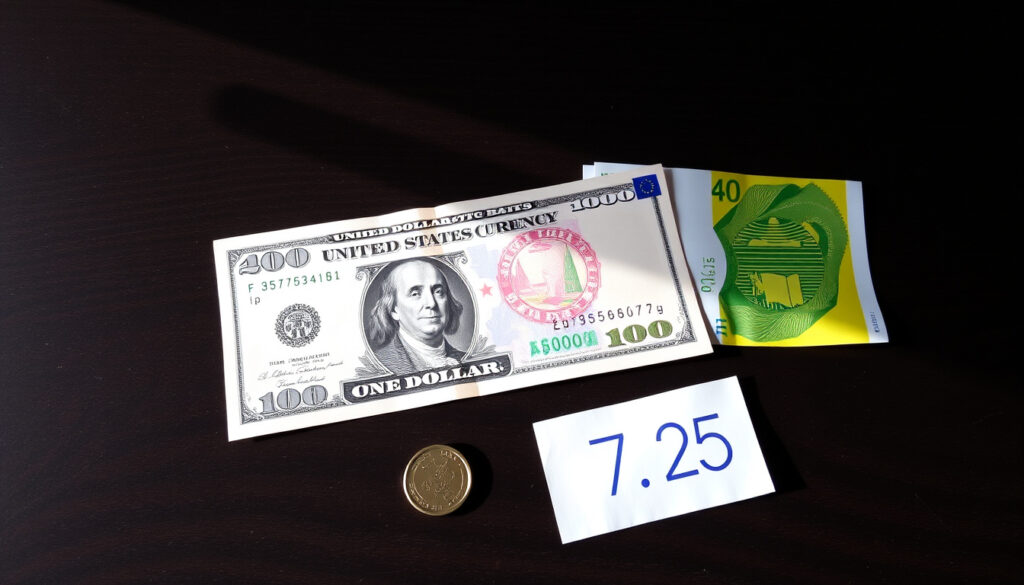
Federal Minimum Wage 2024: $7.25 vs State & Ireland Rates
If you’ve been earning $7.25 an hour since 2009, you’ve watched the price of almost everything climb — but your paycheck hasn’t budged. That’s the reality of the federal minimum wage, which has been frozen for 15 years. We compare that stagnant rate to the state-level increases sweeping the U.S. and to Ireland’s rapidly rising national minimum wage, so you can see where $20 an hour or €15 an hour actually lands in today’s economy.
Federal minimum wage (2024): $7.25 per hour ·
States with higher minimum wage: 34 ·
Year of last federal increase: 2009 ·
Ireland national minimum wage (2024): €12.70 per hour ·
Projected Ireland minimum wage (2026): €14.15 per hour ·
Living wage threshold for single adult in US: varies by state, ~$15–$20 per hour
Quick snapshot
- Federal minimum wage is $7.25 per hour for covered nonexempt employees (U.S. Department of Labor (federal wage regulator))
- 34 states, territories, and districts have minimum wages above $7.25 as of 2024 (National Conference of State Legislatures (state policy authority))
- Ireland’s national minimum wage in 2024 is €12.70 per hour for workers aged 20 and over (Eurofound (EU working conditions agency))
- Whether the U.S. federal minimum wage will increase in the near future — no legislation is currently moving through Congress
- Exact cost-of-living impact for $20/hour varies enormously by county and household composition
- Ireland’s minimum wage beyond 2026 has not yet been set
- July 2009: Federal minimum wage set to $7.25 — no increase since (U.S. Department of Labor (federal wage regulator))
- January 2024: Ireland’s minimum wage rose to €12.70 (Eurofound (EU working conditions agency))
- January 2026: Ireland scheduled to reach €14.15 (Eurofound (EU working conditions agency))
- U.S. federal rate stays at $7.25 unless Congress acts; state-level increases continue to diverge
- Ireland’s minimum wage rises to €13.50 in January 2025 and €14.15 in January 2026
- The gap between the U.S. federal floor and Ireland’s floor will widen further
The nine data points below show the official rates, annual equivalents, and living wage benchmarks that define the two countries’ wage floors.
| Metric | Value |
|---|---|
| Federal minimum wage (US, 2024) | $7.25 per hour |
| Year federal rate last increased | 2009 |
| Number of states with higher minimum wage | 34 |
| Ireland national minimum wage (2024) | €12.70 per hour |
| Ireland minimum wage (2025) | €13.50 per hour |
| Ireland minimum wage (2026) | €14.15 per hour |
| Living wage for single adult (US average) | ~$17–$21 per hour |
| Annual gross at $7.25 for 37.5‑hour week | $14,137.50 |
| Annual gross at €12.70 for 37.5‑hour week | €24,765 |
What is the federal minimum wage in the US?
Current federal minimum wage rate
- The federal minimum wage is $7.25 per hour for covered nonexempt employees under the Fair Labor Standards Act (U.S. Department of Labor (federal wage regulator)). This rate applies in states with no minimum wage law or that set a rate below $7.25 (Economic Policy Institute (non‑partisan research organization)).
History of the federal minimum wage
- Congress last raised the federal minimum wage in July 2009, when it went from $6.55 to $7.25 per hour. It has not changed since (U.S. Department of Labor (federal wage regulator)). That makes the current freeze the longest since the minimum wage was established in 1938.
States with minimum wages above the federal level
- As of 2024, 34 states and territories have minimum wages above the federal floor, according to the National Conference of State Legislatures (state policy authority). Washington state leads at $16.28 per hour, while 21 states still sit at the $7.25 baseline.
What is the minimum wage in Ireland 2024?
Current national minimum wage in Ireland (2024)
- Ireland’s national minimum wage for workers aged 20 and over is €12.70 per hour in 2024, set by ministerial order S.I. No. 497/2023 (Eurofound (EU working conditions agency)). The rate applies to all employees with some exceptions for younger workers.
Future increases: 2025 and 2026
- The rate is scheduled to rise to €13.50 per hour in January 2025 and to €14.15 per hour in January 2026 (Eurofound (EU working conditions agency)).
Subminimum rates for younger workers
- Workers under 20 may receive lower rates: €10.16 for 19-year-olds, €8.89 for 18-year-olds, and €7.87 for 17-year-olds in 2024, as detailed by Citizens Information (Irish government‑affiliated advisory service).
Is $20 an hour good in America?
Cost of living by state and city
- In high‑cost states like California, New York, and Massachusetts, $20 per hour often falls short of a living wage. The Economic Policy Institute (non‑partisan research organization) estimates that a single adult in New York City needs roughly $22 per hour to cover basic needs. In lower‑cost states like Mississippi or Alabama, $20 can provide modest comfort.
Comparison to living wage estimates
- The MIT Living Wage Calculator estimates a living wage for one adult across the U.S. averages roughly $17–$21 per hour. But that average masks large differences: San Francisco’s living wage for a single adult tops $28 an hour, while in rural Kansas it drops to about $15.
Earning $20/hour vs. federal minimum wage
- At $20 per hour, a 40‑hour week yields $800. That is nearly three times the $290 a worker at $7.25 takes home for the same hours. Yet the gap between $20 and a living wage in expensive cities underscores that “good” is relative to location (Bureau of Labor Statistics (official U.S. inflation data)).
$20 an hour can feel comfortable in a low‑cost town but be a survival wage in a coastal city. The rule of thumb: if rent consumes more than 30% of gross pay at $20/hour, you’re likely in an area where $20 isn’t enough.
What is the minimum salary for a 37.5 hour week?
Annual equivalent at federal minimum wage
- At $7.25 per hour for a 37.5‑hour week: weekly gross = $271.88; annual gross (52 weeks) = $14,137.50. That’s below the federal poverty line for a single adult in 2024 (HHS (U.S. poverty guidelines authority)).
Annual equivalent at $20/hour
- At $20 per hour for the same 37.5‑hour week: weekly = $750; annual = $39,000. That’s roughly the U.S. median personal income and would be considered a solid middle‑class salary in many areas (U.S. Census Bureau (official income statistics)).
Comparison to Ireland’s minimum wage weekly
- In Ireland, at €12.70/hour for 37.5 hours: weekly = €476.25; annual = €24,765. By 2026, at €14.15/hour, the annual figure rises to about €27,593 (Eurofound (EU working conditions agency)).
What is €15 an hour annually?
Annual income at €15/hour based on 40-hour week
- €15 per hour for 40 hours per week (52 weeks) yields €31,200 annually before tax. That’s above Ireland’s 2024 national minimum wage annual equivalent of €26,416 (€12.70 × 40 × 52).
Comparison to US $15/hour
- $15 per hour for 40 hours gives $31,200 annually — the same nominal figure. But purchasing power diverges. In Ireland, that €31,200 buys less in rent and utilities than $31,200 does in most U.S. states, though it includes broader social protections like healthcare (OECD (international economic data)).
Tax implications
- In the U.S., a single filer earning $31,200 would owe about $1,770 in federal income tax (2024 standard deduction). In Ireland, €31,200 falls into the 20% bracket after the €1,875 personal tax credit and employee PAYE credit, resulting in an effective income tax rate around 14% before USC and PRSI (Revenue Ireland (Irish tax authority)).
€15/hour in Ireland and $15/hour in America look identical on paper but buy very different standards of living once housing, healthcare, and taxes are factored in. The nominal number is only one piece of the puzzle.
Four key metrics, one stark pattern: Ireland’s minimum wage has grown substantially while the U.S. federal rate has flatlined.
| Metric | U.S. (Federal) | Ireland |
|---|---|---|
| 2024 hourly minimum wage | $7.25 | €12.70 |
| Year of last increase | 2009 | 2024 |
| Scheduled rate for 2026 | $7.25 (no change) | €14.15 |
| Annual gross (40-hr week) | $15,080 | €26,416 (2024) |
| Living wage gap (vs. single adult) | ~$10–$15 below | €2.05 below (2024 living wage €14.75) |
Upsides
- State‑level action gives many workers a higher floor than federal rate
- Ireland’s legislated schedule provides certainty for workers and businesses
- $20/hour can be a comfortable wage in lower‑cost U.S. regions
Downsides
- 21 states still stuck at $7.25, with no raise in sight
- U.S. federal freeze creates a growing geographic inequality in earnings
- Ireland’s living wage gap (€2.05/hour) means even higher rates don’t guarantee a minimum acceptable standard
Timeline signal
- — Federal minimum wage set to $7.25 per hour; no increase since (U.S. Department of Labor (federal wage regulator)).
- — Many states enact their own minimum wage increases above the federal floor (National Conference of State Legislatures (state policy authority)).
- — Ireland national minimum wage becomes €12.70 per hour (Eurofound (EU working conditions agency)).
- — Ireland minimum wage rises to €13.50 per hour.
- — Ireland minimum wage scheduled to reach €14.15 per hour.
- — No federal minimum wage increase passed by Congress; state rates continue to diverge.
Confirmed facts vs. What’s unclear
Confirmed facts
- Federal minimum wage is $7.25 per hour in 2024.
- Ireland minimum wage is €12.70 in 2024, rising to €14.15 by 2026.
- 34 states have minimum wages above the federal rate as of 2024 (NCSL (state policy authority)).
- The Irish living wage for 2024/25 is €14.75 per hour (Living Wage Technical Group (independent Irish research body)).
What’s unclear
- Whether the U.S. federal minimum wage will increase in the near future — no legislation is currently moving through Congress.
- Exact cost-of-living impact for $20/hour varies significantly by location.
- Future Ireland increases beyond 2026 have not been set.
Expert perspectives
“The federal minimum wage has remained at $7.25 since July 2009. For covered nonexempt employees, this is the baseline rate that applies in states with no state minimum wage or that set a minimum wage below the federal level.”
U.S. Department of Labor (federal wage regulator)
“As of January 1, 2024, 34 states, territories, and districts have minimum wages above the federal level. The state minimum wage ranges from $7.25 to $16.28 per hour.”
National Conference of State Legislatures (state policy authority)
“Ireland’s national minimum wage for an experienced adult worker is €12.70 per hour from 1 January 2024. It will increase to €13.50 in January 2025 and €14.15 in January 2026.”
Eurofound (EU working conditions agency)
“The 2024/25 living wage is €14.75 per hour, reflecting a 1.7% increase in weekly expenditure needs. The gap between the national minimum wage and the living wage is €2.05 per hour.”
Living Wage Technical Group (independent Irish research body)
What this adds up to is clear: the U.S. federal minimum wage has been a relic for 15 years, while Ireland has committed to a three‑year escalation that will lift its floor by nearly 30%. For the 21 U.S. states still tied to $7.25, the consequence is deepening inequality. For Irish workers earning €12.70, the path to €14.15 is fixed. For anyone earning $20 an hour or less in America, the choice is stark: move to a state with a higher floor, push for local action, or wait for a Congress that has shown no urgency to act.
socialjustice.ie, socialjustice.ie, employsome.com, squareup.com, nerinstitute.net, en.wikipedia.org, nidirect.gov.uk
While the federal minimum wage has remained at $7.25 since 2009, many states have set higher floors, and readers can compare state minimum wage variations to see how their pay stacks up.
Frequently asked questions
Does the federal minimum wage increase automatically?
No. It only changes when Congress passes a law amending the Fair Labor Standards Act. There is no automatic indexing to inflation.
What is the minimum wage for tipped workers in the US?
The federal tipped minimum wage is $2.13 per hour, provided tips bring the total to at least $7.25. Many states have higher tipped minimum wages.
How often is the minimum wage in Ireland reviewed?
The Low Pay Commission reviews it annually and makes recommendations to the government. The rate is set by ministerial order.
Is there a separate minimum wage for workers under 20 in Ireland?
Yes. Workers aged 19 get 80% of the full rate (€10.16 in 2024), 18‑year‑olds get 70% (€8.89), and 17‑year‑olds get 70% (€7.87).
What is the living wage in the US for a family of four?
The MIT Living Wage Calculator estimates a living wage for two working adults with two children ranges from about $24 per hour (low‑cost state) to over $35 per hour (high‑cost city).
How does the US minimum wage compare to other developed countries?
The U.S. federal rate of $7.25 is one of the lowest among OECD nations. In 2024, most Western European countries have minimum wages equivalent to $12–$16 per hour after purchasing power adjustments.
Can employers pay less than the minimum wage in any situation?
Limited exceptions exist for full‑time students, workers with disabilities, and tipped employees under certain conditions. State laws may provide stricter protections.
More related posts
 Hit the Road Jack: Original Singer, Meaning & Real Story
 How to Train Your Dragon 2025 Cast: Full Live-Action Actors List
 How Much Is Costco Membership – Current Prices and Plans
 Is Utah a Red State – Election History and GOP Dominance
 Madison Beer and Justin Herbert Relationship Explained
 Sweet Home Alabama Lyrics – Full Text and Meaning
 Hamburger Chain Restaurant Closures Sweep US 2025-2026
 Redmi Note 13 Pro 5G: Price, Specs & Where to Buy in Ireland
