Indian in the Cupboard: Summary, Moral, and Age Guide
Few children’s books from the 1980s still spark as much debate as The Indian in the Cupboard. What starts as a simple fantasy about a toy coming to life has, over four decades, become a lightning rod for discussions about how Native American culture is portrayed in children’s media. Published in 1980 by Lynne Reid Banks and adapted into a 1995 film directed by Frank Oz, the story follows a boy named Omri who discovers a magical cupboard that brings his plastic Iroquois figurine to life. Below we unpack the plot, the moral lessons, the controversies around racial stereotyping, and what parents and educators need to know about age-appropriateness.
Original publication year: 1980 ·
Film release year: 1995 ·
Book author: Lynne Reid Banks ·
Film director: Frank Oz ·
Number of sequels in the book series: 4
Quick snapshot
- Fictional story, not based on real events (Wikipedia (encyclopedic source))
- Long‑term effect on young readers remains debated (UBC iSchool (educational commentary))
- From children’s classic to challenged book in three decades (UBC iSchool (educational commentary))
- Ongoing conversations about updating library collections and teaching materials (American Indian Library Association (professional guidelines))
Seven facts that define the book and its cultural footprint:
| Label | Value |
|---|---|
| Book Title | The Indian in the Cupboard |
| Author | Lynne Reid Banks |
| First Published | 1980 |
| Film Release | 1995 |
| Film MPAA Rating | PG |
| Main Child Character | Omri |
| Main Toy Character | Little Bear |
Is The Indian in the Cupboard a True Story?
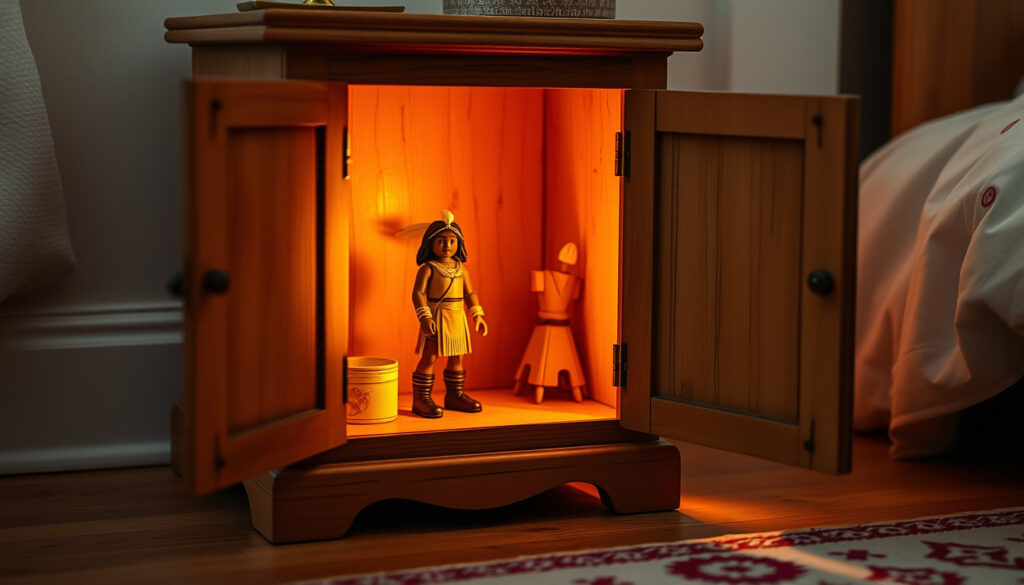
No, The Indian in the Cupboard is a work of fiction. It was written by British author Lynne Reid Banks and published in 1980. The story follows a young boy named Omri who receives a magical cupboard for his ninth birthday. When he locks a plastic Indian figurine inside and turns the key, the toy comes to life as a real Iroquois man, called Little Bear (Wikipedia (encyclopedic source)). The book is part of a five‑volume series, and no historical record suggests any such cupboard exists. The narrative is pure fantasy, though it draws on real historical elements of Iroquois culture.
Parents should clearly explain to children that the magic is fictional, while using the story as a springboard to discuss real Native history.
The implication: the “true story” question misses the point — the fiction is intentional, designed to explore how a modern child interacts with a figure from early American history.
What Is the Moral of The Indian in the Cupboard?
The central moral of the book is about taking responsibility for the lives and well‑being of others. Omri learns that his actions have real consequences for the tiny people he brings to life. He cannot treat Little Bear as a toy; he must feed him, protect him, and respect his humanity (according to AV Club (entertainment criticism)).
Lessons about responsibility
- Omri struggles with the weight of caring for another being, discovering that power without accountability harms the vulnerable.
- The story explicitly contrasts Omri’s initial excitement with the sober reality of providing for a living person.
The value of friendship and respect
- Through his friendship with Little Bear, Omri learns to see beyond external labels and treat people with dignity.
- The book also shows that cultural exchange requires genuine effort — Omri researches Iroquois history and language to communicate better.
While the moral framework is positive, critics argue that the power dynamic (a white boy controlling a Native figure) undercuts the lesson, teaching a troubling hierarchy instead of genuine equality.
Why this matters: the moral works on the surface, but the structural imbalance between Omri and Little Bear complicates the message for modern readers.
What Is the Main Theme of The Indian in the Cupboard?
The primary themes include responsibility, friendship, and the ethical treatment of others. But the book also explores cultural exchange and the clash between historical reality and childhood fantasy. According to the AV Club review cited above, the story can be read as “a parable about race that is not subtle.” It forces both Omri and the reader to confront the difference between stereotypes and real people.
Another key theme is identity — both personal and cultural. Little Bear insists on being called by his name and teaching Omri about his heritage. The book deliberately uses the term “Indian” throughout, which has been flagged as problematic by the American Indian Library Association’s professional guidelines because it flattens diverse Indigenous nations into a single outdated label.
The pattern: the themes are ambitious for children’s fiction, but the execution is now seen as dated and, in some ways, counterproductive to the very lessons it tries to teach.
Is The Indian in the Cupboard Appropriate or Offensive?
This is the most hotly debated question. The book is typically recommended for readers aged 8–12, and the film is rated PG. However, many educators and librarians now argue that the content is not age‑appropriate due to racial stereotyping (as discussed by UBC iSchool (educational commentary)).
Age recommendations for the book and film
- The publisher suggests ages 9 and up (per Wikipedia, encyclopedic source).
- Common Sense Media rates the film for ages 8+ due to mild peril and fantasy violence.
- Individual school districts vary: some include it in 3rd‑grade curricula, others have removed it from libraries.
Common criticisms regarding cultural representation
- The American Indian Library Association’s “I is Not for Indian” checklist explicitly cites this book as an example of problematic vocabulary, asking whether Native characters are described with terms like “savage,” “noble savage,” or “warrior” in a demeaning way (AILA professional guidelines).
- The book relies on visual stereotypes such as buckskin, beads, and feathers, and perpetuates the “vanishing Indian” idea — that Native people belong only to the past.
- Several reader reviews on library sites describe the book as “racist” and “inappropriate for today’s children” (Seattle Public Library user comment).
The cumulative effect of small stereotypes can be more harmful than a single overt slur. Parents who choose to share the book should pair it with contextual discussion and complementary materials that present authentic Native perspectives.
The trade‑off: the book can still be a useful teaching tool if approached critically, but many families prefer modern alternatives that offer respectful representation without requiring a “teachable moment” about racism.
Why Was The Indian in the Cupboard Banned or Challenged?
The Indian in the Cupboard has been challenged and in some cases removed from school and public libraries. According to the American Indian Library Association’s professional guidelines, the main reasons include the use of racial stereotypes, offensive language, and the “noble savage” trope. The book is not the #1 most banned book (that title typically goes to other titles), but it regularly appears on lists of frequently challenged books (as noted by UBC iSchool educational commentary).
- Challenges have been filed in school districts in several U.S. states, citing the portrayal of Native Americans as stereotypes.
- Some libraries have placed the book in a special “historical context” collection with advisory labels.
- The American Indian Library Association provides educators with a checklist to evaluate whether books like this one rely on degrading terms such as “squaw,” “papoose,” or “redskin” (see AILA professional guidelines linked above).
The pattern: the ban is not about censorship of a single harmless story; it is a response to a larger reckoning with how children’s literature has historically represented Indigenous peoples. For educators, the decision to keep or remove the book reflects a shift from “intent” (the author’s positive moral) to “impact” (the harm caused by stereotypes).
Upsides
- Encourages responsibility and empathy toward others.
- Prompts discussions about history and cultural difference.
- Engaging fantasy plot appeals to reluctant readers.
- Available widely and often affordable.
Downsides
- Relies on outdated and potentially harmful stereotypes.
- Uses “Indian” as a generic label rather than specific tribal identities.
- Power imbalance (white child in control) can send unintended messages.
- Subject to bans and controversy that may distract from its educational goals.
Timeline: from classic to controversy
- 1980 – Lynne Reid Banks publishes The Indian in the Cupboard (UBC iSchool educational commentary).
- 1980–1990s – The book gains popularity, wins several children’s literature awards, and is widely praised (Wikipedia encyclopedic source).
- 1995 – Film adaptation released, directed by Frank Oz, bringing the story to a wider audience (Wikipedia).
- 1990s–2000s – The book begins appearing on challenged‑book lists due to racial stereotyping concerns (UBC iSchool).
- 2020s – Ongoing discussions in educational and parenting communities about cultural sensitivity, with several libraries re‑evaluating the title (American Indian Library Association professional guidelines).
What we know vs. what remains unclear
Confirmed facts
- The Indian in the Cupboard is a fictional work, not a true story.
- The book was published in 1980 by Lynne Reid Banks (Wikipedia (encyclopedic source)).
- The film adaptation was released in 1995 (same Wikipedia source).
- The story has been challenged and banned in certain school districts (UBC iSchool (educational commentary)).
What’s unclear
- The exact number of school districts that have banned the book is not centrally tracked.
- The long‑term effect of the book’s cultural portrayal on young readers is still debated with no firm consensus (UBC iSchool educational commentary).
- Whether the author has publicly revised her views on the book’s language and characterizations remains unconfirmed.
Perspectives on the story
“The American Indian Library Association’s guidance on evaluating Native‑themed materials explicitly lists The Indian in the Cupboard as an example when asking whether Indians are portrayed through stereotyped vocabulary and ‘noble savage’ tropes.”
American Indian Library Association (professional guidelines)
“The book is substantially about stereotypes and the difficulty of looking past labels such as ‘the cowboy’ and ‘the Indian.’”
AV Club (entertainment criticism)
“The UBC iSchool commentary frames the book as part of an active social change in how children’s literature is evaluated for harm.”
UBC iSchool (educational commentary)
The Indian in the Cupboard is no longer a simple fantasy choice for parents — it has become a litmus test for how we handle representation in children’s media. For the modern parent or educator, the decision is clear: either present the book with robust contextual discussion and supplementary materials, or choose alternative titles that offer respectful, accurate Native representation without the baggage. Failing to engage with the controversy risks passing on outdated stereotypes to a new generation.
Frequently asked questions
Is The Indian in the Cupboard part of a series?
Yes, it is the first book in a five‑book series written by Lynne Reid Banks. The sequels include The Return of the Indian, The Secret of the Indian, The Mystery of the Cupboard, and The Key to the Indian.
How many books are in The Indian in the Cupboard series?
There are five books in total, published between 1980 and 1998.
What is the name of the Indian character in the book?
The character is named Little Bear, who is an Iroquois man brought to life from a plastic toy.
Is the Indian in the Cupboard movie on Disney+?
As of 2025, the film is not available on Disney+. It streams on various other platforms depending on region (check local availability).
Who directed The Indian in the Cupboard movie?
The film was directed by Frank Oz, released in 1995.
What is the recommended reading level for the book?
Most publishers recommend ages 9 and up, but many educators suggest that children under 12 should read it with adult guidance due to the cultural sensitivity issues.
More related posts
 Sacramento Kings vs Cleveland Cavaliers Player Stats
 Charlie Kirk’s Wife and Kids: What We Know Now
 Knicks vs San Antonio Spurs Timeline – Full Head-to-Head Record
 How Old Is Benson Boone – Current Age, Birthdate and Career
 30 Dollars an Hour Is How Much a Year? (2026 Salary)
 Market Basket Near Me: Store Locations, Hours & Weekly Ad
 Food City Weekly Ad: Find This Week’s Deals & Save
