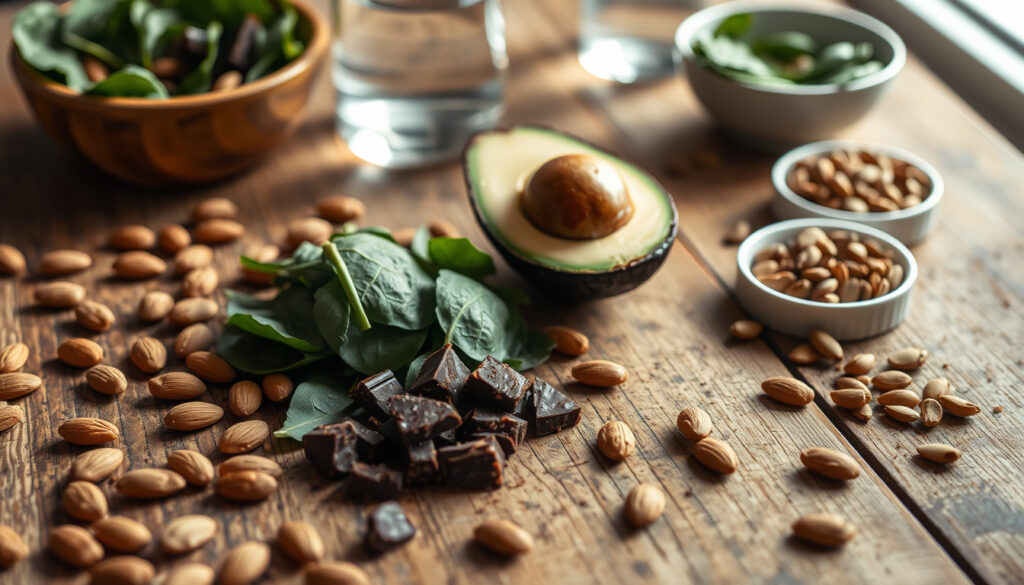
Foods High in Magnesium: Top Sources and Deficiency Signs
Ever feel like you’re running on empty — tired, achy, a little off? That dull sensation might be your body asking for more magnesium, a mineral that fuels hundreds of daily processes from muscle relaxation to steady heartbeats.
Daily recommended intake (adult males): 400–420 mg ·
Daily recommended intake (adult females): 310–320 mg ·
Top single food (pumpkin seeds, roasted, per 100g): 262 mg ·
Percentage of U.S. adults with inadequate intake: ~48% ·
Bioavailability from food vs. supplements: Higher from food
Quick snapshot
- Pumpkin seeds top the list at 262 mg per 100g (roasted) — a single ounce delivers 156 mg (GoodRx health resource)
- Other high-density sources: chia seeds (111 mg/oz), almonds (80 mg/oz), boiled spinach (78 mg per ½ cup) (GoodRx health resource)
- RDA for men ages 31+ is 420 mg; for women 31+ it’s 320 mg (NIH Office of Dietary Supplements)
- Exact bioavailability varies by food matrix and individual gut health (Harvard T.H. Chan School of Public Health)
- Optimal daily intake for athletic populations and older adults may differ from standard RDA (Harvard T.H. Chan School of Public Health)
- Awareness of magnesium deficiency has grown steadily; NIH data show ~48% of U.S. adults consume below the Estimated Average Requirement (Harvard T.H. Chan School of Public Health)
- Recent research emphasizes the role of magnesium in blood pressure regulation and bone density (Harvard T.H. Chan School of Public Health)
- Shift focus from “which food is highest” to “how to combine foods for reliable daily intake”
- Expect more fortified beverages and plant-based milks with added magnesium
Five key figures, one pattern: magnesium needs are highly individualized, but a few high-density foods can bridge the gap quickly.
| Label | Value |
|---|---|
| RDA for adult men | 400–420 mg |
| RDA for adult women | 310–320 mg |
| Highest food per 100g | Pumpkin seeds (262 mg) |
| Common deficiency sign | Muscle cramps or twitching |
| Percentage of magnesium absorbed from food | 30–40% average |
What one food is highest in magnesium?
Foods with the highest magnesium density per 100g
- Pumpkin seeds (roasted): 262 mg per 100g (NIH Office of Dietary Supplements)
- Chia seeds: 335 mg per 100g (approx. 111 mg per ounce) (GoodRx health resource)
- Almonds: 270 mg per 100g (80 mg per ounce) (GoodRx health resource)
- Cooked spinach: 87 mg per 100g (157 mg per cup) (St. Jude Children’s Research Hospital)
Comparison of seeds, nuts, and dark leafy greens
Seeds generally lead the pack by weight, but nuts and greens offer more realistic serving sizes for daily use. One ounce of almonds (about 23 nuts) provides 80 mg, while a full cup of cooked spinach delivers 157 mg — nearly half a day’s need for women.
Why portion size matters
Magnesium density per 100g is a useful benchmark, but what you actually eat in a sitting matters more. An ounce of pumpkin seeds (a small handful) gives 156 mg. A tablespoon of chia seeds in a smoothie adds about 40 mg. The trick is layering small amounts across meals.
A single serving of pumpkin seeds nearly covers half the daily RDA for women. But relying on one food alone gets monotonous — rotating seeds, nuts, and greens keeps intake high without boredom.
How can I raise my magnesium quickly?
Immediate dietary switches
- Replace a low-magnesium snack (pretzels, crackers) with a handful of almonds or pumpkin seeds — adds 80–156 mg instantly.
- Add a cup of cooked spinach to pasta, eggs, or rice — 157 mg per cup (GoodRx health resource).
- Choose whole grains over refined: a slice of whole-wheat bread has about 23 mg vs. 6 mg in white bread.
Magnesium-rich snacks and meals
A quick snack: 1 oz almonds (80 mg) + 1 oz dark chocolate (64 mg) = 144 mg. For a meal, a black bean and spinach bowl with pumpkin seeds can deliver 300+ mg easily.
When to consider supplements under medical advice
If dietary changes aren’t enough, a supplement may help. But the upper limit from supplements is 350 mg per day — exceeding that can cause diarrhea and cramping (Harvard T.H. Chan School of Public Health). Always consult a doctor before adding high-dose magnesium.
Pairing magnesium foods with vitamin D and vitamin B6 may improve absorption. Avoid excessive calcium or caffeine around the same meal — both can interfere with uptake.
What are signs of magnesium deficiency?
Early signs: muscle cramps, fatigue, weakness
- Muscle twitches or cramps, especially at night, are among the earliest indicators (NIH Office of Dietary Supplements).
- General fatigue and weakness without a clear cause.
- Loss of appetite and nausea in some cases.
More severe symptoms: numbness, arrhythmias, seizures
Chronic deficiency can lead to abnormal heart rhythms, numbness or tingling, and personality changes. Severe cases may involve seizures or coronary spasms (NIH Office of Dietary Supplements).
Risk groups and when to test
People with type 2 diabetes, gastrointestinal diseases (Crohn’s, celiac), alcohol dependence, and older adults are at higher risk. A simple blood test (serum magnesium) can diagnose deficiency.
Serum magnesium only captures about 1% of total body magnesium — tissue levels may be low even when blood levels appear normal. Doctors sometimes use a 24-hour urine test for a fuller picture.
How can I get 100% magnesium daily?
Sample one-day meal plan meeting the RDA
Here’s a plan that delivers roughly 420 mg for men and 320 mg for women:
- Breakfast: Oatmeal (½ cup dry, 56 mg) + 1 tbsp chia seeds (40 mg) = 96 mg
- Lunch: Spinach salad (2 cups raw, 48 mg) with ¼ cup almonds (80 mg) and grilled chicken (25 mg) = 153 mg
- Snack: 1 oz pumpkin seeds (156 mg) + banana (32 mg) = 188 mg
- Dinner: ½ cup black beans (60 mg) + 3 oz salmon (26 mg) = 86 mg
- Total: ~523 mg — covers even the higher male RDA.
Combining high-magnesium foods across meals
Layering multiple sources is more effective than one large dose. Spinach at lunch, pumpkin seeds as a snack, and black beans at dinner spread intake evenly, improving absorption.
Adjusting for age, gender, and pregnancy
Pregnant women need 350–360 mg per day; lactating women need 310–320 mg (NIH Office of Dietary Supplements). Older adults may benefit from slightly higher intake due to reduced absorption. Adjust portions accordingly.
What drink is high in magnesium?
Fortified waters and mineral waters
Some mineral waters contain 100+ mg per liter. Check labels — not all brands are equal. Fortified waters often add magnesium citrate or chloride for better absorption (Australian health service healthdirect).
Plant-based milks (soy, oat)
A cup of fortified soy milk provides about 61 mg of magnesium (GoodRx health resource). Oat milk is lower but often fortified. Check the nutrition panel.
Smoothie recipes with magnesium-rich ingredients
Blend 1 cup spinach (24 mg raw), 1 banana (32 mg), 1 tbsp almond butter (45 mg), and 1 cup unsweetened almond milk (15 mg) — total ~116 mg. Add a spoonful of chia seeds for another 40 mg.
Top magnesium foods compared
Six common sources, one pattern: seeds and leafy greens dominate, but nuts and legumes offer practical serving sizes for everyday eating.
| Food | Serving | Magnesium per serving | Magnesium per 100g |
|---|---|---|---|
| Pumpkin seeds, roasted | 1 oz (28g) | 156 mg | 262 mg |
| Chia seeds | 1 oz (28g) | 111 mg | 335 mg |
| Almonds | 1 oz (28g) | 80 mg | 270 mg |
| Spinach, boiled | ½ cup (90g) | 78 mg | 87 mg |
| Black beans, cooked | ½ cup (86g) | 60 mg | 70 mg |
| Dark chocolate (70–85% cocoa) | 1 oz (28g) | 64 mg | 228 mg |
The trade-off: seeds offer the highest density per gram, but you eat them in smaller amounts. Dark chocolate is a tasty option, but watch added sugars. Cooked spinach is the most volume-friendly source.
Steps to raise your magnesium level
- Assess your baseline — track what you eat for three days using an app. Note any symptoms from the deficiency list.
- Swap one snack daily — replace chips or pretzels with a mix of almonds, pumpkin seeds, or dark chocolate.
- Green up one meal — add a cup of cooked spinach to your lunch or dinner (157 mg bonus).
- Go for whole grains — choose brown rice (42 mg per cup), quinoa (60 mg per cup), or whole-wheat bread over refined alternatives.
- Include legumes twice a week — black beans, chickpeas, or lentils add 50–60 mg per half-cup serving.
- Hydrate with fortified drinks — try mineral water or fortified soy milk if plain water is your norm.
- Retest after two weeks — note symptom changes. If still low, consult a doctor about supplementation.
Confirmed facts vs. what’s still unclear
Confirmed facts
- Pumpkin seeds are the highest common food source per 100g (NIH Office of Dietary Supplements)
- Magnesium RDA values from NIH: 400–420 mg for men, 310–320 mg for women
- Deficiency symptoms include muscle cramps, fatigue, and arrhythmias (Harvard T.H. Chan School of Public Health)
- Magnesium absorption from food ranges from 30% to 40% on average
What’s still unclear
- Exact bioavailability varies by food matrix and individual gut health (Harvard T.H. Chan School of Public Health)
- Optimal daily intake for specific populations (athletes, elderly) may differ from standard RDA
- Whether high-dose food sources are as effective as supplements in raising tissue levels quickly
Expert perspectives on magnesium
“Magnesium is a cofactor in more than 300 enzyme systems that regulate diverse biochemical reactions in the body, including protein synthesis, muscle and nerve function, blood glucose control, and blood pressure regulation.”
NIH Office of Dietary Supplements
“Magnesium from food is safe — the kidneys eliminate excess amounts in urine. High-dose supplements, however, can cause diarrhea, nausea, and abdominal cramping.”
Harvard T.H. Chan School of Public Health
Summary
Magnesium is one of the most common yet overlooked nutrient gaps. The fix isn’t complicated: a handful of pumpkin seeds, a cup of spinach, and a few ounces of almonds can cover a full day’s need for most adults. For anyone in the U.S. already running low — nearly half the population — the choice is clear: swap one snack and add one green serving, or keep wondering why the fatigue and cramps won’t lift.
medicalnewstoday.com, health.clevelandclinic.org, wicworks.fns.usda.gov
If you are looking to boost your intake, foods rich in magnesium provides an excellent overview of top sources and how to incorporate them into your diet.
Frequently asked questions
Are eggs high in magnesium?
No — one large egg contains only about 6 mg of magnesium. Eggs are not a significant source.
Is 1 banana a day enough magnesium?
Not on its own. A medium banana has about 32 mg, which is only 10% of the RDA for women and 8% for men. It’s a good start but needs to be combined with other sources.
What do you crave when low on magnesium?
There’s no proven link to specific food cravings for magnesium. Some people report craving chocolate, which contains some magnesium, but this is anecdotal and not clinically established.
Are walnuts high in magnesium?
Moderately — one ounce of walnuts provides about 45 mg of magnesium. Good, but not as dense as almonds (80 mg/oz) or pumpkin seeds (156 mg/oz).
How much magnesium do I need per day?
Adult men should aim for 400–420 mg per day, adult women 310–320 mg. Pregnancy increases the need to 350–360 mg, lactation to 310–320 mg (NIH Office of Dietary Supplements).
Can too much magnesium be harmful?
Yes — only from supplements. The upper limit is 350 mg per day from supplements. Excess can cause diarrhea, nausea, and cramping. Magnesium from food is not a risk because kidneys excrete the surplus (Harvard T.H. Chan School of Public Health).
What foods are high in magnesium and potassium?
Foods rich in both include spinach (157 mg magnesium, 839 mg potassium per cup cooked), black beans (60 mg magnesium, 305 mg potassium per ½ cup), and salmon (26 mg magnesium, 326 mg potassium per 3 oz). Bananas are high in potassium (422 mg) but lower in magnesium (32 mg).
More related posts
 Wicked (2024 Film): Top Fan Questions Answered
 What Is Considered High Blood Pressure? Stages & Charts
 Prairie Farms Milk Recall 2025: What You Need to Know
 How Many Gram of Protein in an Egg? Your Daily Protein Guide
 Animal Crossing: New Horizons – Mental Health, Villagers & Tips
 How to Turn Off Touchscreen on Chromebook (2 Methods)
 Call of Duty Black Ops 6: Release Date, Worth It, and Comparison
