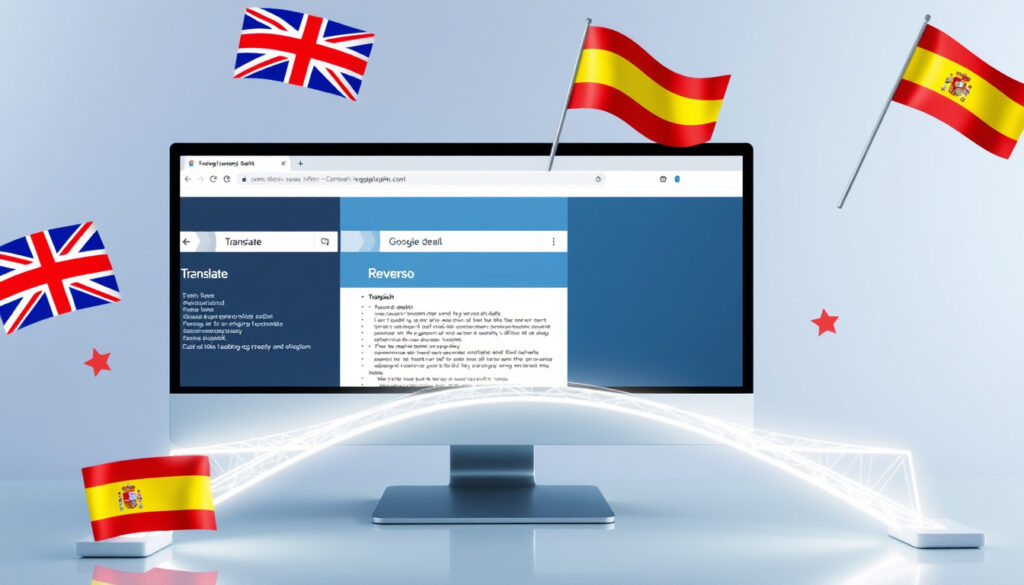
Best Free English to Spanish Translators: Google, DeepL, Reverso
If you’ve ever stared at a Spanish menu, a medical form, or a work email and wished for a quick English-to-Spanish bridge, you’re not alone. Millions of people turn to free online translators every day, but the results can vary wildly between tools. This guide cuts through the noise by comparing the three most-searched free English-to-Spanish translators—Google Translate, DeepL, and Reverso—backed by accuracy scores, feature breakdowns, and real-world use cases you can apply right now.
Languages in Google Translate: 249 · DeepL accuracy rating: 9.2/10 · Reverso free limit: 2,500 words
Quick snapshot
- Google Translate supports 249 languages free (ATA Net)
- DeepL scores 9.2 overall in translation accuracy tests (TranslatePress)
- Reverso offers 2,500 free words with no account required (Spanish Academy)
- Exact accuracy rankings for Spanish dialects (Latin American vs. European)
- How DeepL’s 30 supported web languages compare to app coverage in real-world tests
- Whether free-tier privacy protections differ across Reverso usage tiers
- DeepL mobile app expanded to 100+ languages pre-2026 (Google Play)
- TranslatePress published comparative accuracy scores pre-2026 (TranslatePress)
| Metric | Value |
|---|---|
| Top free tool | Google Translate |
| Languages (Google web) | 249 |
| Languages (DeepL app) | 100+ |
| DeepL overall accuracy | 9.2/10 |
| Reverso overall accuracy | 8.3/10 |
| Free character limit (Google) | 5,000 |
| Free word limit (Reverso) | 2,500 |
| Reverso Premium price | 6.49€ |
What is the best free English to Spanish translator?
For everyday quick translations, Google Translate leads by reach: it covers 249 languages and works offline once you download a language pack. For formal documents or nuanced Spanish, DeepL consistently outperforms with a 9.2 accuracy rating versus Reverso’s 8.3, according to TranslatePress tests. Reverso, meanwhile, is built for learners—it wraps translations with grammar checks, verb conjugations, and real-world example sentences that the other two don’t offer.
Google Translate overview
Google Translate leads with the broadest language coverage—249 languages on the web version, 108 in the mobile app. It handles text, voice, images, and even full websites, making it the go-to for travelers or anyone who needs quick comprehension. The free version translates up to 5,000 characters per entry with no account needed, per Spanish Academy. Offline mode requires downloading Spanish packs in advance, but once installed, it works without data.
Google Translate wins on scale: 249 languages means it likely covers your target dialect whether you need European Spanish, Mexican Spanish, or even a regional variant.
DeepL advantages
DeepL is the accuracy champion among free tools, earning a 9.2 overall score from TranslatePress. The Android and iOS apps support over 100 languages, including image and voice input. Unlike Google, DeepL handles file uploads (DOCX, PPTX, PDF) in its free tier, a feature that travelers and professionals often prioritize. The interface stays minimal and fast—no ads, no cluttered menus.
Reverso features
Reverso sits in a different category: it’s a language-learning platform first and translator second. The free plan covers 2,500 words per session with no login required. Beyond translation, you get grammar correction, verb conjugation tables, and example sentences pulled from real-world contexts. Reverso Context supports offline use and voice-to-text, according to ATA Net. The trade-off: it supports roughly 25-26 languages versus Google’s 249.
How to use Google Translate for English to Spanish?
Getting started takes under a minute. The web version at translate.google.com accepts typed text, pasted URLs, or uploaded documents. The mobile app adds camera mode and conversation mode for spoken exchanges.
Web version steps
- Open translate.google.com in any browser
- Select English from the left panel, Spanish from the right
- Type or paste up to 5,000 characters and press the arrow icon
- Copy the result or click the speaker icon to hear pronunciation
App touch to translate
The Google Translate app (available on Google Play and App Store) includes “tap to translate”: hold your finger on any text field in a foreign app, and Google overlays a translation without switching screens. This works across messaging apps, emails, or social media.
Audio support
Conversation mode lets two speakers talk in real time—each person’s language gets translated as they speak. The app displays text output alongside the audio, so even in noisy environments you have a written record.
Is DeepL a good free English to Spanish option?
Yes, for precision-focused tasks. DeepL’s 9.2 accuracy rating significantly outpaces Google Translate and Reverso on word choice and tone, per TranslatePress. Spanish translations read more naturally, with better handling of subjunctive mood and formal versus informal registers.
Translation accuracy
DeepL scores 9.6/10 for style and tone, the highest of any tool tested by TranslatePress. For formal emails, legal summaries, or academic texts where nuance matters, this gap is noticeable. Google Translate scored lower on these same benchmarks, though still usable for gist-level comprehension.
File support
DeepL on the web accepts DOCX, PPTX, and PDF uploads directly—unique among free tiers. Drop a Spanish contract or resume into the translator and download a translated version that preserves formatting. The mobile app extends this with photo translation: point your camera at a Spanish sign or document and get an instant overlay translation.
Vs Google
DeepL supports roughly 30 languages on the web versus Google’s 249. If you need Spanish and a handful of European languages, DeepL covers it. If you also need Arabic, Chinese, or rare dialects, Google Translate remains the practical choice. DeepL also reportedly lacks offline mode on mobile, per ATA Net, while Google Translate supports full offline packs.
What about Reverso for free translations?
Reverso fills a niche between translator and language tutor. It translates English to Spanish and vice versa, but layers on tools that Google and DeepL don’t include for free: grammar explanations, verb conjugation lookups, and example sentences showing how a phrase appears in real media.
Supported languages
Reverso covers roughly 25-26 languages in its free tier, significantly fewer than Google’s 249. For Spanish specifically, it handles both European and Latin American variants, though the interface doesn’t distinguish regional preferences as explicitly as WordReference does, per Spanish Academy.
Text translation
The free text translation box accepts up to 2,500 words—roughly 12,500 characters—without logging in. You can type, paste, or dictate via voice input. Results include alternative translations you can click through to compare phrasing.
Free service details
Reverso runs free with optional premium upgrades starting at 6.49€ per month, which removes character limits and adds spell-checking, per TranslatePress. The free tier includes document translation, which Reverso states preserves layout and ensures data privacy, per Spanish Academy. Note that Reverso may not support document file translation according to some comparison sources, unlike DeepL.
Can I get a free English to Spanish translator app?
All three tools—Google Translate, DeepL, and Reverso—offer free mobile apps. The choice depends on what features matter most: offline capability, accuracy, or learning tools.
Google Translate app
The Google Translate app (available on Google Play and App Store) covers 108 languages with camera, conversation, and offline modes. Download the Spanish offline pack once and translate anywhere without data.
Download options
DeepL’s app is available for Android and iOS. Reverso Context downloads from Google Play and App Store. All three are free with no mandatory account creation.
Key features
- Google: 108 languages, offline packs, conversation mode, tap-to-translate
- DeepL: 100+ languages, file upload, camera translation, high accuracy
- Reverso: 26 languages, grammar checker, conjugation tables, offline mode
If you translate on the go without Wi-Fi, Google Translate and Reverso offer offline modes. DeepL reportedly requires an internet connection for most features, making it less reliable in connectivity dead zones.
The implication: Offline mode is the deciding factor for travelers or anyone working in areas with spotty connectivity—Google Translate has the most mature offline system, while DeepL’s lack of offline support remains a notable gap.
| Feature | Google Translate | DeepL | Reverso |
|---|---|---|---|
| Languages (web) | 249 | 30 | 25-26 |
| Languages (app) | 108 | 100+ | 26 |
| Free character limit | 5,000 chars | Unlimited (text) | 2,500 words |
| Offline mode | Yes (packs) | Reportedly no | Yes |
| Camera translation | Yes | Yes | Limited |
| File upload | Documents | DOCX, PDF, PPTX | Documents |
| Accuracy score | Not published | 9.2/10 | 8.3/10 |
| Learning tools | No | No | Grammar, verbs, examples |
| Voice input | Yes | Limited | Yes |
| Premium price | Free | From €5.99/month | 6.49€/month |
| Specification | Details |
|---|---|
| Free text limit (Google) | 5,000 characters per entry |
| Free word limit (Reverso) | 2,500 words per session |
| DeepL web languages | 30 languages |
| DeepL app languages | 100+ languages |
| Reverso Premium starting price | 6.49€ per month |
| Google offline packs | Downloadable per language |
| Reverso document support | Preserves layout |
| DeepL file formats | DOCX, PDF, PPTX |
Upsides
- Google Translate offers unmatched language breadth (249 languages)
- DeepL delivers the highest accuracy scores for formal Spanish
- Reverso includes learning tools not found in competitors
- All three tools work without requiring an account
- DeepL and Reverso support offline use on mobile
Downsides
- DeepL lacks offline mode on mobile per ATA Net tests
- Reverso supports fewer languages (25-26) than competitors
- Google Translate scored lower on nuance and style benchmarks
- DeepL’s web version covers only 30 languages
- Reverso interface is busier due to learning features
Step-by-step: choosing your free translator
Three scenarios, three tools—here’s the quick decision path:
- Need broad language coverage or offline travel use? Choose Google Translate. Download the Spanish offline pack before your trip and translate without data. Best for quick comprehension over polished phrasing.
- Need formal, nuanced Spanish for documents or professional work? Choose DeepL. Its 9.2 accuracy and 9.6 style/tone scores make it the strongest for legal, medical, or academic Spanish where word choice carries weight.
- Learning Spanish and want grammar help alongside translation? Choose Reverso. The conjugation tables, grammar checker, and real-world example sentences make it a study tool as much as a translator. Free tier covers 2,500 words per session.
What we know for sure vs. what’s still unclear
Confirmed facts
- Google Translate supports 249 languages free
- DeepL scores 9.2 overall in accuracy tests
- Reverso scores 8.3 overall in accuracy tests
- DeepL rated 9.6/10 for style and tone
- Reverso offers 2,500 free words
- DeepL supports DOCX, PDF, PPTX file uploads
- Google Translate supports offline mode via downloads
What’s unclear
- Whether DeepL’s 30 web languages match app coverage for Spanish variants
- Exact accuracy differences for Latin American vs. European Spanish dialects
- How free-tier privacy protections compare across Reverso usage tiers
- Whether recent model updates have closed the accuracy gap between tools
Google Translator comes first as it’s probably the most well-known free online tool and website.
— Spanish Academy (Language Blog)
Reverso, meanwhile, is packed with tools for learners. You get translations with real world examples, a grammar and spell checker.
— Tech Comparison (YouTube Reviewer)
Related reading: best free online word tools · free Wordle game website
DeepL edges out with 9.2/10 accuracy, much like the Google vs DeepL vs Reverso matchup that tests free limits across apps and files.
Frequently asked questions
How many languages does Google Translate support?
Google Translate supports 249 languages on the web and 108 in the mobile app. You can download offline language packs to use it without data.
Is Reverso completely free?
Reverso offers a free tier with up to 2,500 words per session. Premium starts at 6.49€ per month and removes character limits while adding spell-checking.
Does DeepL translate files?
Yes. DeepL accepts DOCX, PPTX, and PDF uploads directly in its free web tier—a feature neither Google Translate nor Reverso fully matches for document translation.
What is touch to translate in the app?
Tap-to-translate lets you hold your finger on any text field in a foreign app. Google Translate overlays a translation without switching screens. It works across messaging apps, emails, and social media.
Are there offline options in free translators?
Google Translate and Reverso support offline use. Google requires downloading language packs in advance; Reverso Context stores data for offline access. DeepL reportedly requires an internet connection for most features.
Can I use these on mobile?
Yes. Google Translate works on Android and iOS. DeepL is available on Android and iOS. Reverso Context also runs on Android and iOS.
More related posts
 Fun with Dick and Jane (2005): Cast, Reviews, Enron Connection
 Dodgers vs Blue Jays: 2026 Rematch, History & Colors
 Indian in the Cupboard: Summary, Moral, and Age Guide
 Is Utah a Red State – Election History and GOP Dominance
 Back to the Frontier – NASA Artemis Moon Mission Update
 1923 Season 2 Episode 7: Spoilers, Recap & Baby’s Fate
 Dollar Price in Colombia Today: TRM Rate & Forecast
 Wicked (2024 Film): Top Fan Questions Answered
